
Operating System
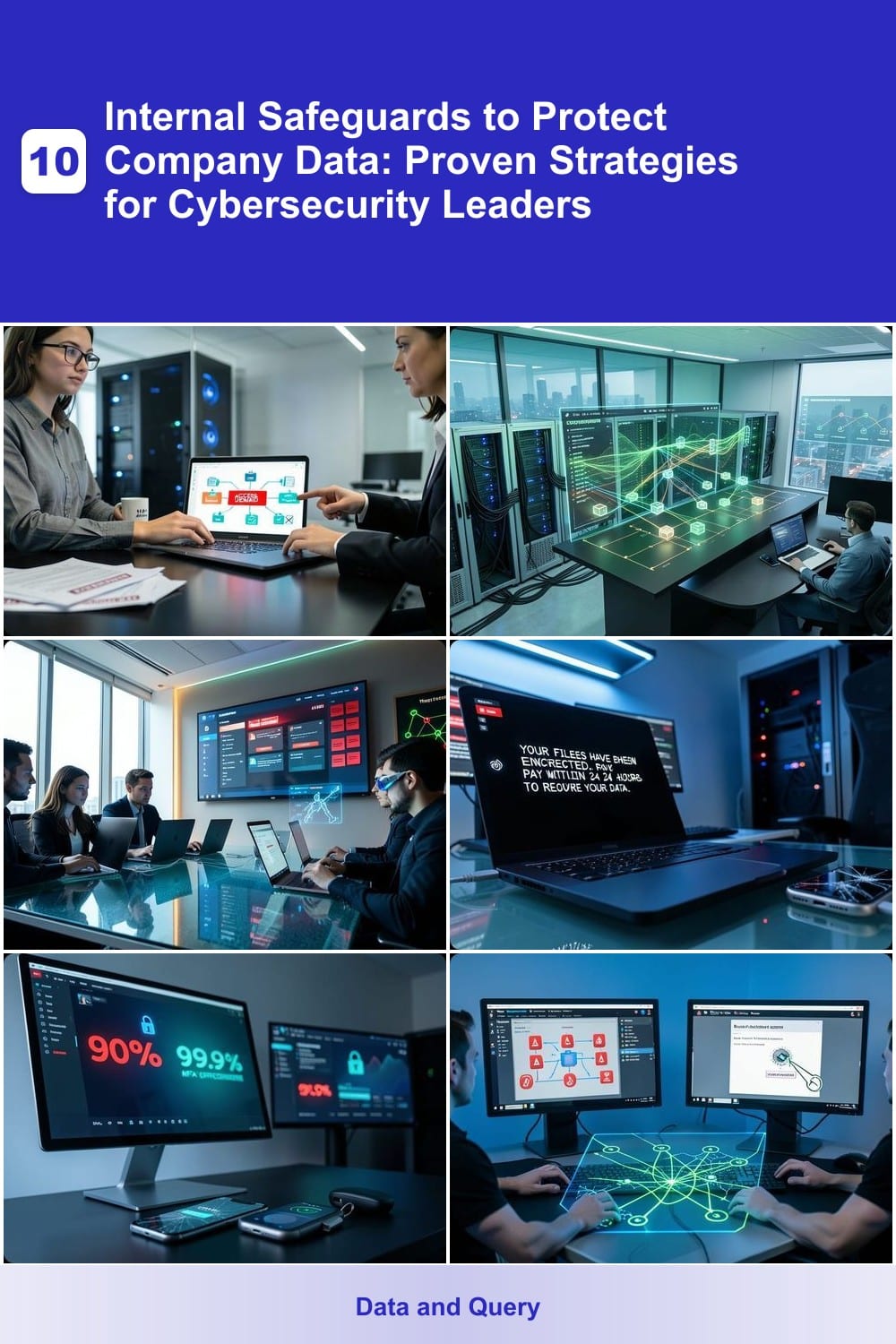
Cyber threats evolve daily, but robust internal safeguards remain your first line of defense. These 10 proven strategies empower cybersecurity leaders to fortify company data against breaches, insider threats, and human error—without relying solely on external solutions.
Role-Based Access Control Implementation

Imagine a scenario where an intern accidentally deletes critical financial records—or worse, a disgruntled employee accesses data they shouldn’t. Role-Based Access Control (RBAC) stops these risks by assigning permissions based on job functions, not just user roles. This isn’t just a security feature; it’s a strategic shield that reduces your attack surface by 90% for internal threats, making it a cornerstone for industries like finance and healthcare.
RBAC works by mapping user roles (e.g., HR Manager, Finance Analyst, IT Admin) to specific data access levels. Tools like Microsoft Active Directory or Okta automate this process, ensuring employees only see what they need—no more, no less. For example, a customer service rep might access account details but not payroll data, while a compliance officer gets full audit logs but no ability to modify records. Combined with just-in-time (JIT) access, RBAC eliminates standing privileges, so even admins only get temporary elevated access when absolutely necessary.
This safeguard is non-negotiable for organizations handling patient records (HIPAA), financial transactions (PCI DSS), or intellectual property. Start by auditing your current permissions—you’ll likely find 50%+ of users have unnecessary access. With RBAC, you turn guesswork into precision security. ✨
Automated Data Encryption Policies

Forget relying on IT teams to manually encrypt files—automated data encryption policies lock down sensitive data the moment it’s created, whether stored on servers, transmitted across networks, or synced to employee devices. Unlike static access controls, this safeguard eliminates human error by enforcing AES-256 encryption by default, ensuring compliance with GDPR, HIPAA, or CCPA without constant oversight.
Modern solutions like Microsoft Purview Information Protection or Varonis Data Encryption integrate with Active Directory and cloud storage platforms to classify and encrypt data dynamically. For example, a customer’s Social Security number in a CRM system auto-encrypts, while a marketing draft remains readable. These tools also support key management systems (like AWS KMS or HashiCorp Vault) to rotate encryption keys automatically, reducing insider threats.
Ideal for healthcare providers handling patient records or tech startups protecting proprietary algorithms, this policy turns encryption from a checkbox into an always-on shield. No more forgotten backups or misconfigured shares—just seamless, audit-proof security. 🔧
Employee Security Awareness Training

Your employees may be your biggest security risk—or your strongest defense. Employee Security Awareness Training transforms human error into a proactive shield by immersing teams in real-world phishing simulations and threat scenarios, slashing success rates by up to 70%. Unlike static manuals, these programs adapt to evolving tactics like CEO fraud or zero-day exploits.
Platforms like KnowBe4 or PhishMe deliver customizable campaigns that mimic actual attacks, complete with debriefs on why a click was dangerous. The best programs track progress per user, identifying weak spots like password reuse or suspicious email habits. For hybrid teams, mobile-friendly modules ensure remote workers stay sharp—critical when 60% of breaches start with a compromised credential.
This isn’t just for IT teams: Finance, HR, and engineering departments all need tailored training to spot threats in their workflows. Start with a quarterly phishing test and watch your organization’s resilience grow. 💡
Endpoint Detection and Response Systems

When employees connect personal devices or unmanaged laptops to your network, you’re inviting risks like ransomware and data exfiltration—unless you deploy an Endpoint Detection and Response (EDR) system. Unlike traditional antivirus, EDR actively hunts for suspicious behavior across all endpoints, not just known malware signatures.
Solutions like CrowdStrike Falcon or Microsoft Defender for Endpoint provide real-time threat detection, automated response actions (like isolating infected devices), and detailed forensic reports. They integrate with SIEM tools for centralized monitoring, ensuring compliance while reducing mean time to detect (MTTD) by up to 80%. The key? Behavioral analysis that flags anomalies like unusual data transfers or cryptomining processes before they escalate.
This is a game-changer for remote-first teams or companies with BYOD policies, where traditional security tools often fail. 💻
Multi-Factor Authentication Enforcement

Credential stuffing attacks account for 90% of all breaches—but multi-factor authentication (MFA) stops 99.9% of them before they even reach your systems. Unlike passwords alone, MFA adds a second verification layer, making stolen credentials useless without a second factor like a code, biometric scan, or hardware token.
Modern MFA solutions like Duo Security or Microsoft Authenticator integrate seamlessly with Active Directory, Azure AD, and Okta, enforcing policies for all cloud apps and internal systems. Push notifications, TOTP (time-based codes), or FIDO2 security keys ensure compliance with frameworks like NIST SP 800-63B while keeping friction low for legitimate users.
This isn’t optional—it’s a non-negotiable baseline for any organization relying on SaaS platforms, remote access, or third-party vendors. Start with MFA for admins and privileged accounts, then expand to all employees to lock down your most critical entry points. ✨
Regular Security Audits and Penetration Testing

Think of penetration testing as a controlled cyberattack on your own systems—except instead of criminals exploiting flaws, your security team does. This proactive approach uncovers vulnerabilities like misconfigured firewalls, weak authentication protocols, or hidden backdoors before malicious actors find them.
Professional firms simulate real-world attacks using tools like Metasploit or Burp Suite, testing everything from web applications to network infrastructure. Many compliance frameworks—such as HIPAA, GDPR, or NIST SP 800-115**—require regular audits, often quarterly or annually, to validate security controls.
This safeguard is non-negotiable for sectors like healthcare (protecting patient records) or government (defending national security systems). ⚡
Data Loss Prevention Software Deployment

One misclick or one disgruntled employee could expose years of R&D—Data Loss Prevention (DLP) software acts as your last line of defense against unintended leaks. Unlike firewalls that block external threats, DLP monitors internal data flows in real-time, stopping sensitive files from leaving via email, cloud storage, or even USB drives.
Solutions like Symantec DLP or Microsoft Purview scan content dynamically, flagging violations of policies (e.g., credit card numbers or trade secret keywords) before transmission. They integrate with Microsoft 365, Salesforce, and SharePoint, offering context-aware access controls—meaning an engineer can edit a design file but not email it externally. Deployment typically starts with a risk assessment to prioritize high-value data (e.g., patents, customer databases), then enforces rules via AI-driven anomaly detection.
This isn’t just for Fortune 500s—startups with proprietary algorithms or law firms handling client secrets benefit most. For organizations where one leak could mean bankruptcy, DLP turns "oops" moments into automated safeguards. ✨
Secure File Sharing and Collaboration Tools

Tired of sending sensitive client contracts or creative project files via unsecured email? Secure file-sharing platforms like Box Governance or Dropbox Business replace risky attachments with end-to-end encryption and granular access controls—so only authorized team members can view or edit files.
These tools go beyond basic security by offering automated audit trails (tracking who accessed what and when) and expiration policies (auto-deleting files after a set period). For example, Box integrates with Microsoft 365 and Google Workspace, while Dropbox provides client-side encryption for extra protection. Legal firms can enforce watermarking on documents to deter leaks, and creative agencies benefit from version control to track design iterations securely.
Perfect for industries where confidentiality is non-negotiable—think legal, advertising, or healthcare—these platforms ensure compliance with GDPR, HIPAA, or SOC 2 without sacrificing collaboration. 💻
Incident Response Plan Development

When a breach hits, every minute counts—yet many organizations scramble without a predefined incident response plan. This isn’t just a backup; it’s your battle-tested playbook for containing damage, minimizing downtime, and meeting regulatory deadlines like GDPR or HIPAA. Without it, you’re leaving critical decisions to chaos.
A robust plan includes clear roles (e.g., incident commander, legal liaison, PR lead), step-by-step containment protocols, and automated escalation triggers for threats like ransomware. Tools like Splunk for log analysis or IBM Resilient integrate with your existing security stack to streamline execution. The goal? Reduce mean time to detect (MTTD) and mean time to recover (MTTR) by 60% or more.
This safeguard is non-negotiable for finance, healthcare, or government—but even startups should adopt a scaled-down version. The cost of not having one? Fines, reputational damage, and lost customer trust. ⚡
Third-Party Risk Assessment Program

Your supply chain isn’t just a network of contracts—it’s a potential cybersecurity blind spot. A Third-Party Risk Assessment Program systematically evaluates vendors, contractors, and partners for security gaps that could become your weakest link.
This program typically includes automated vulnerability scanning of vendor systems, contractual security compliance clauses, and continuous monitoring of third-party access to your data. Tools like ServiceNow GRC or OneTrust Vendor Risk streamline assessments, while frameworks like NIST SP 800-161 provide structured guidelines. The goal? Catch outdated encryption, unpatched systems, or lax employee training before they compromise your defenses.
Companies relying on outsourced IT, cloud providers, or global supply chains can’t afford to skip this. Start with a risk-based prioritization matrix to focus on vendors handling the most sensitive data—your most critical assets are only as secure as your weakest partner. ✨